Tech explained
Lovable Apps Data Exposure Explained: What Went Wrong
Updated Nov 27, 2026 · 3 min read
Researchers at a Hamburg security firm reported in November 2026 that apps built with the AI app builder Lovable exposed private chat messages, passport records and some payment details to anyone, with no login needed. They say Lovable itself was not hacked: many of the apps skipped database access rules, known as row level security.
Watch onYouTube
Key points
- ●Researchers reported scanning 159,041 Lovable projects.
- ●One German lifestyle forum leaked more than 200,000 private chat messages.
- ●More than 1,000 passport-related records and some payment details were also exposed.
- ●The reported cause was missing access rules in each app, not a breach of Lovable.
- ●If you built an app with AI, open it logged out and see what you can read.
What happened
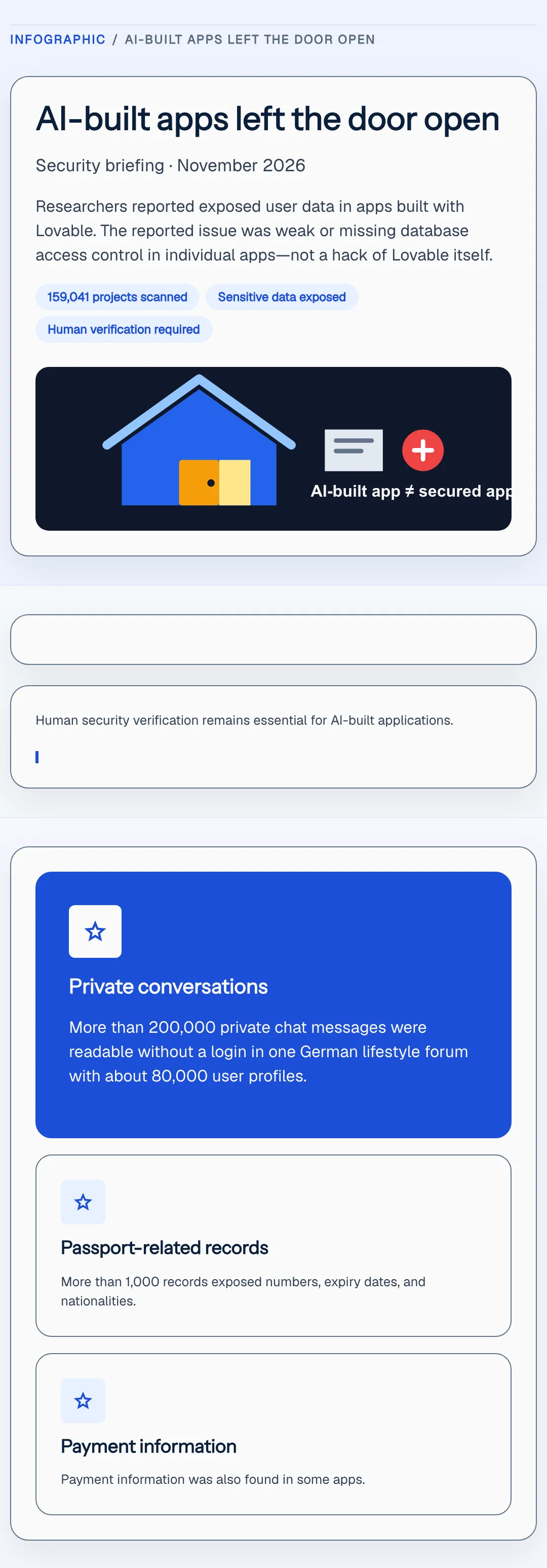
In November 2026, researchers at a security firm in Hamburg reported that apps built with Lovable, an AI app builder, were leaking user data. Anyone could read it. No login, no password, no exploit.
Cybernews, Sifted and Techzine covered the findings. The headline on the visual sheet above sums it up: AI-built apps left the door open.
What was exposed
The researchers reported scanning 159,041 Lovable projects. Among the exposed data:
- Private conversations. More than 200,000 private chat messages were readable without a login in one German lifestyle forum that had about 80,000 user profiles.
- Passport-related records. More than 1,000 records showed passport numbers, expiry dates and nationalities.
- Payment information. Some apps also exposed payment details.
That's the kind of data people assume is locked away the moment they sign up.
Why it happened: missing access rules
This is the part that matters if you build anything. The researchers say it was not a hack of Lovable itself. The weak spot was in the apps: many of them skipped database access rules, called row level security.
Here's the idea. An app's database holds everyone's rows: your messages, my messages, someone else's passport. Row level security is the rule that says "a user can only read the rows that belong to them." Leave it off and the database will happily hand every row to whoever asks, signed in or not.
An AI builder can generate a working app in minutes. Working isn't the same as safe, though. The screens look right, the login page looks right, and the data underneath is still open.
What to do if you built an app with AI
You don't need to be a security expert to catch this one:
- Test it logged out. Open a private browser window and try to load pages or data that should need an account.
- Check every table. Make sure each one that holds user data has access rules turned on.
- Try another account. Sign in as a second user and see whether you can read the first user's data.
- Get a human review before real people put real data in it. The sheet's closing point is that human security checks still matter for AI-built apps.
Sources
Reported by Cybernews, Sifted and Techzine, based on research from a Hamburg security firm. The numbers above are the researchers' reported figures.
Frequently asked questions
Was Lovable hacked?
According to the researchers' report, no. The problem was in the individual apps people built with Lovable: many did not set database access rules, so their data could be read without logging in.
What is row level security?
It's a set of rules on a database table that decides which rows each user may read or change. Without it, anyone who can reach the database can read every row, including other people's messages.
What data was exposed in Lovable apps?
Reported examples include more than 200,000 private chat messages from one German lifestyle forum with about 80,000 user profiles, more than 1,000 passport-related records with numbers, expiry dates and nationalities, and payment information in some apps.
How do I check my own AI-built app?
Log out, or open a private browser window, and try to load pages and data that should belong to a signed-in user. If you can see them, add access rules to every table before you ship.