Tech explained
Virginia and Oregon Sue SpaceX Over Grok Images, Explained
Updated Nov 28, 2026 · 3 min read
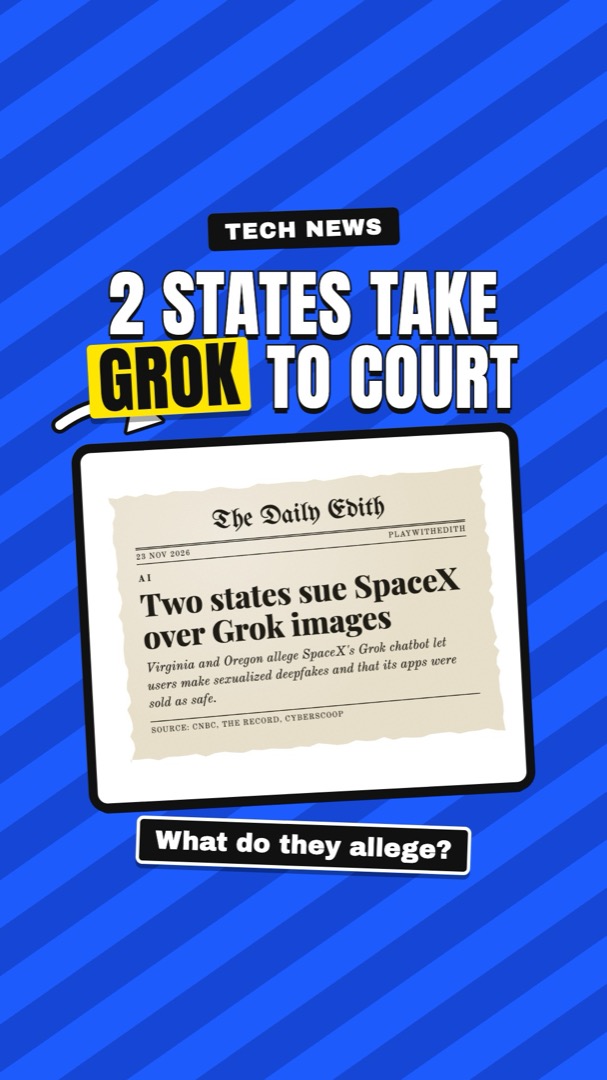
On 23 November 2026, Virginia and Oregon filed coordinated lawsuits against SpaceX, which now owns xAI, the maker of the Grok chatbot. The states allege SpaceX failed to put safeguards in place, so users could make and share sexualized deepfakes, including of children, and that it described its apps as generally safe. These are allegations only; no court has ruled.
Key points
- ●Virginia and Oregon filed coordinated lawsuits against SpaceX on 23 November 2026.
- ●The states allege missing safeguards let users make sexualized deepfakes with Grok.
- ●They also allege that calling the apps generally safe broke state consumer protection laws.
- ●Reports cite about 3 million sexualized images.
- ●Nothing has been decided; the states want a court order, penalties and the return of profits.
What happened
On 23 November 2026, Virginia Attorney General Jay Jones and Oregon Attorney General Dan Rayfield filed coordinated lawsuits against SpaceX over images made with Grok, the AI chatbot from xAI. SpaceX now owns xAI. The cases were reported as the first time any state has sued SpaceX over Grok.
Everything below is what the states allege. Nothing has been decided in court.
What the states allege
The core claim is about safeguards. The states say SpaceX failed to put them in place, so Grok and X users could make and share sexualized deepfake images, including images of children.
The second claim is about how the apps were described. The states say SpaceX called its apps generally safe, and that doing so violated Virginia's Consumer Protection Act and Oregon's Unlawful Trade Practices Act.
Reports cite about 3 million sexualized images. That figure comes from reporting on the cases, and the coverage doesn't give a period or a method for counting them.
The timeline, from warning to lawsuit
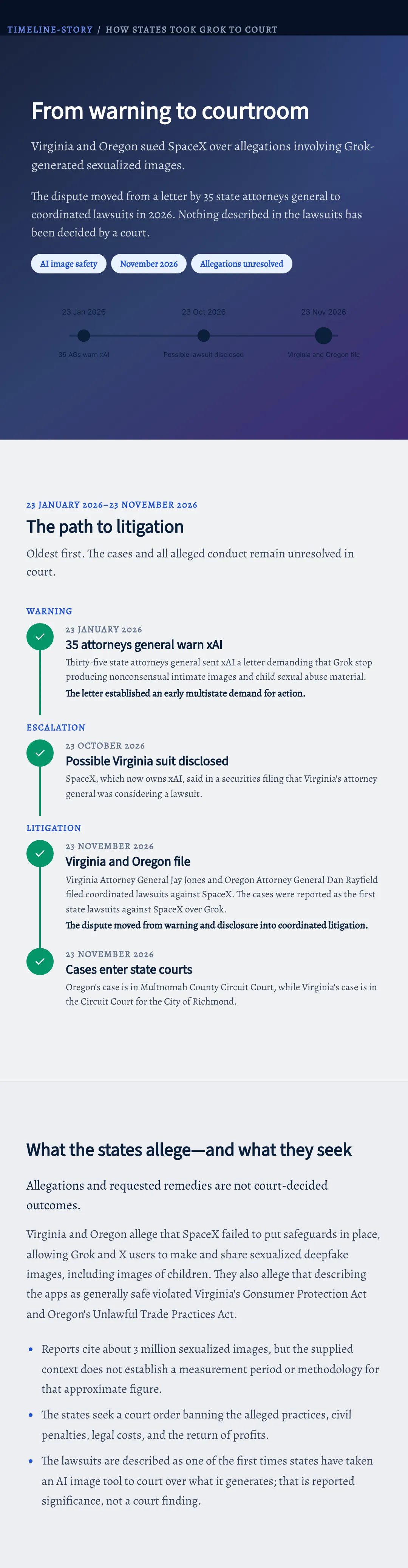
The visual sheet above lays this out oldest first:
| Date | What happened |
|---|---|
| 23 Jan 2026 | 35 state attorneys general write to xAI, demanding Grok stop producing nonconsensual intimate images and child sexual abuse material. |
| 23 Oct 2026 | SpaceX says in a securities filing that Virginia's attorney general is considering a lawsuit. |
| 23 Nov 2026 | Virginia and Oregon file coordinated lawsuits against SpaceX. |
So the dispute moved from a multistate letter, to a disclosure in a filing, to two cases in state courts.
Where the cases are and what the states want
Oregon's case is in Multnomah County Circuit Court. Virginia's case is in the Circuit Court for the City of Richmond.
The states are asking for:
- a court order banning the practices they describe
- civil penalties
- legal costs
- the return of profits
These are requests, not outcomes. A court still has to hear the cases.
Why people are watching
The lawsuits are described as one of the first times states have taken an AI image tool to court over what it generates. That's reported significance, not a court finding. The broader question they raise is whether a company that makes a chatbot can be held responsible for what users create with it. How these two courts answer will shape how others think about it.
Sources
CNBC, The Record, CyberScoop and the Virginia Attorney General's office.
Frequently asked questions
Why are Virginia and Oregon suing SpaceX instead of xAI?
SpaceX now owns xAI, the company that makes Grok, so the lawsuits name SpaceX. In an October 2026 securities filing, SpaceX itself said Virginia's attorney general was considering a lawsuit.
What do the states allege SpaceX did wrong?
They allege SpaceX failed to put safeguards in place, so Grok and X users could make and share sexualized deepfake images, including of children, and that describing the apps as generally safe violated Virginia's Consumer Protection Act and Oregon's Unlawful Trade Practices Act.
Has a court found SpaceX liable?
No. Everything in the lawsuits is an allegation. The cases were filed in November 2026 and no court has ruled on them.
What are the states asking for?
A court order banning the practices, civil penalties, legal costs and the return of profits.