Bottom line: Edithly generates mind maps, summaries, and study visuals directly in regional Indian languages — including Hindi, Tamil, Telugu, Kannada, and Malayalam — so students learning in a regional-medium curriculum get study material in the language they actually study in, not a translation of an English summary.
How the Language Handling Works
Edithly detects the source document's language automatically and keeps the generated visual in that language. Content is split into concepts and categorised, not translated word-for-word — this preserves the original vocabulary and meaning instead of flattening it through machine translation.
Linguistic Approach in Practice
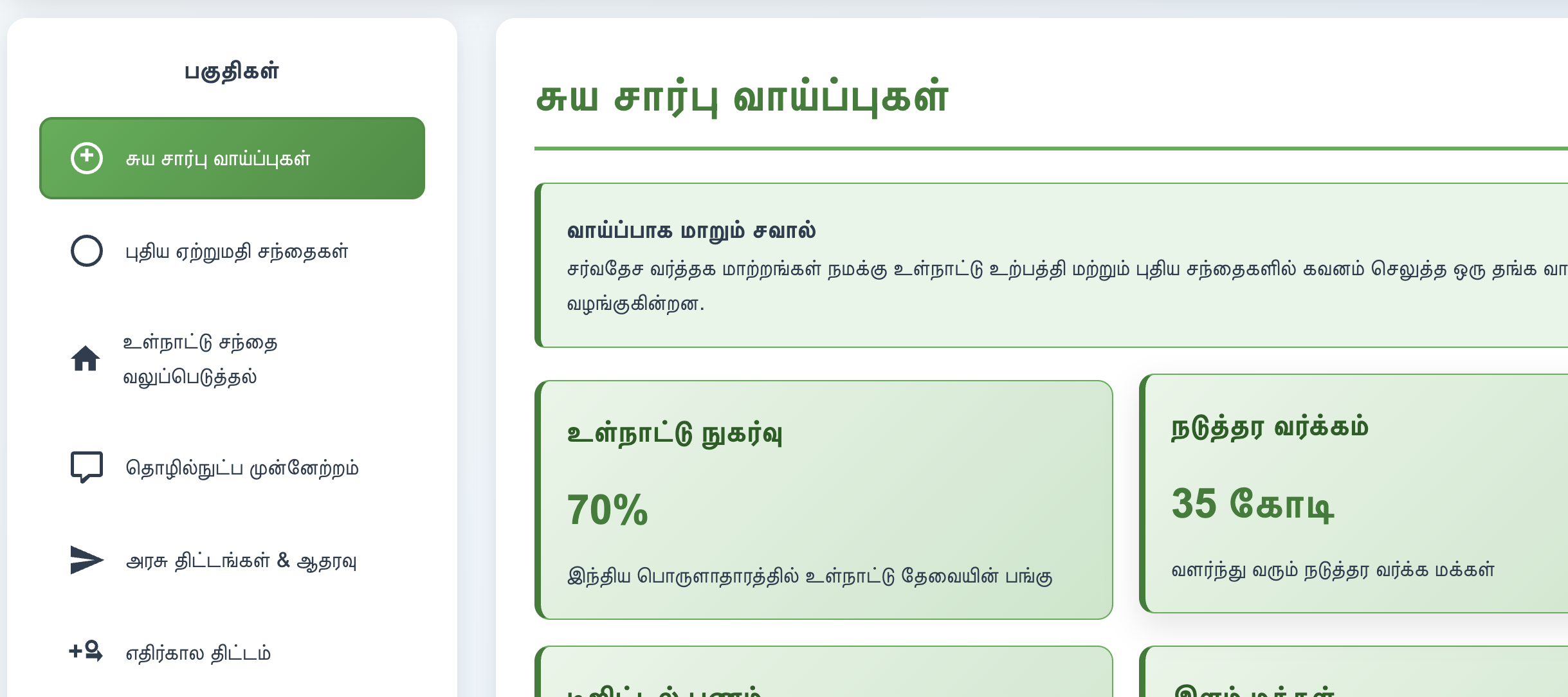
The example below shows Tamil source content split into categorised concepts (left panel), with supporting detail generated around each one — preserving how the topic is actually discussed in Tamil rather than translating it.
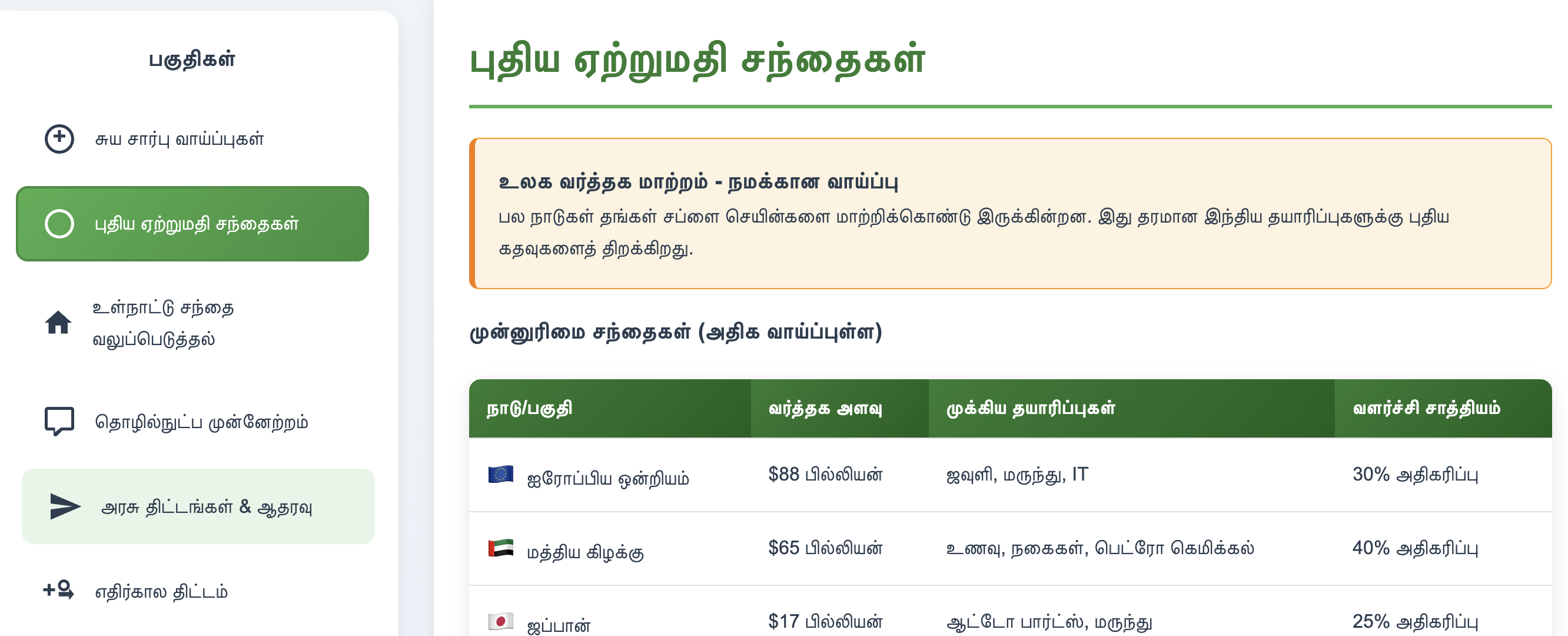
This second example covers the impact of export business on global trade — Edithly surfaces additional regional market context relevant to traders based in Southern India, generated directly from the source language.
This approach keeps learning intuitive and effective regardless of a student's primary language — the linguistic nuance of the source material is preserved rather than lost in translation.